
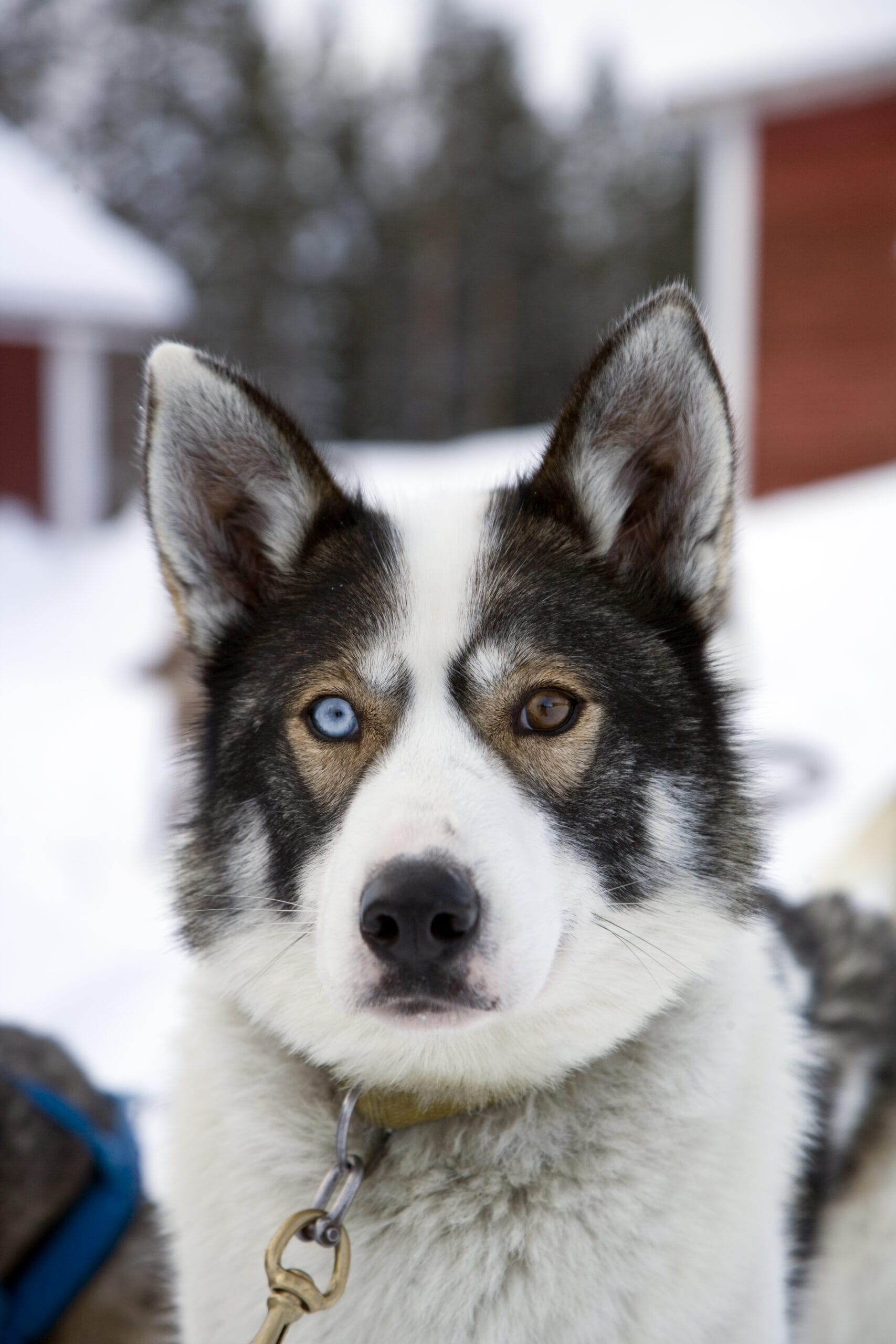
The moment you arrive at a husky kennel in Lapland, something happens that no travel brochure quite prepares you for. The noise hits first: a chorus of howls, barks, and high-pitched yelps that rises from hundreds of dogs simultaneously. Then you see them: all pulling at their lines, pawing the snow, desperate to run.
This is the husky. Not the sleepy pet on a sofa. The real one is built for the Arctic, shaped by thousands of years of evolution and selective breeding, and genuinely, deeply happy only when it is moving.
If you’re planning a stay at Invisible Forest Lodge in Rovaniemi and wondering what a husky safari actually involves, this guide covers everything from the biology of the breed to what your first dog sled ride will feel like.
What Is a Husky? The Basics
A husky is a type of working dog bred specifically for pulling sleds in cold, snowy conditions over long distances. The word “husky” is thought to derive from an old English corruption of “Esky,” a term once used for Inuit people, reflecting the dog’s deep roots in Arctic Indigenous culture.
Today, the term “husky” is used loosely, but there are two main breeds you’ll encounter on a husky safari in Lapland:
1. Siberian Husky – the classic breed most people picture
2. Alaskan Husky – a mixed-breed working dog bred purely for performance
Both are sled dogs. Both are extraordinary. And both are very different from each other.
The Two Main Husky Breeds in Lapland
1. Siberian Husky
This is the breed most people recognise — the one on the posters, with the thick fur, wolf-like markings, triangular ears, and those famous pale blue or mismatched eyes.
The Siberian Husky originated with the Chukchi tribe of northeastern Siberia, who bred the dog over thousands of years on the Chukotka Peninsula, the easternmost edge of Russia, where an ancient land bridge once connected Asia to North America. The Chukchi relied on these dogs for hunting, herding reindeer, and pulling sleds across vast frozen distances. They also kept them as companions and trusted them to babysit children while adults were away on hunts.
Key physical traits of the Siberian Husky:
Double coat – a dense undercoat for insulation plus a longer guard coat that repels snow and moisture
Height – 51 to 60 cm at the shoulder
Weight – 16 to 27 kg (medium-sized, lighter than most people expect)
Eye colours – blue, brown, amber, or heterochromia (one of each)
Tail – curled upward, acts as a nose warmer when the dog sleeps curled up in snow
Paws – thick, with fur between the toes for insulation on ice
The first Siberian Husky was registered in Finland in 1965. Today there are an estimated 15,000 Siberian Huskies in Finland, with around 600 new registrations each year.
Alaskan Husky
The Alaskan Husky is not a recognised pedigree breed; it’s a purpose-built working dog, selectively crossed by mushers over generations for a single goal: to run fast and far.
Its ancestry includes Siberian Husky, Alaskan Malamute, Greyhound, and German Shorthaired Pointer DNA. Because appearance was never a breeding priority, Alaskan Huskies look wildly varied, with different sizes, coat lengths, and colours. What they share is exceptional cardiovascular efficiency, a lean athletic build, and an almost obsessive drive to pull.
Most of the dogs on a husky safari in Rovaniemi will be Alaskan huskies. They’re the preferred choice for working kennels because of their stamina and speed.
A Brief History of the Sled Dog
The relationship between humans and sled dogs is ancient. Archaeological evidence shows that domesticated dogs were being used to pull sleds as far back as 9,000 years ago on what is now Zhokhov Island in northeastern Siberia. Ancient sled runners dating to around 7,000 BC have been found in Finland.
Key moments in sled dog history:
1. Pre-history – Arctic indigenous peoples develop dog sledding as a survival technology across Greenland, Siberia, and North America
2. 1800s – The Alaskan Gold Rush creates enormous demand for sled dogs as the only reliable winter transport to remote mining camps.
3. 1908 – Siberian Huskies are first imported to Alaska for racing, initially mocked as “Siberian Rats” by competitors used to larger dogs
4. 1925 – The famous Serum Run to Nome: 20 mushers and 150 sled dogs relayed diphtheria antitoxin 1,085 km across Alaska in just over 5 days, saving hundreds of lives. The lead dog of the final leg, Balto, became a global hero
5. 1930s – The Siberian Husky breed is formally standardised in the USA
6. 1965 – First Siberian Husky registered in Finland
7. 1980s onwards – Husky tourism develops in Lapland, growing from a few hundred dogs to over 10,000 working sled dogs across Finland today.
The Life of a Sled Dog in Lapland
Understanding the daily life of a husky is important, especially if you care about the animals you’re spending time with.
1. Born to Run – Literally
Huskies are not like pet dogs. Their physiology is adapted to sustained aerobic effort in extreme cold. A fit sled dog can run up to 130 km in a single day and maintain a speed of 32 km/h over distances of 40 km without stopping. Their metabolism is extraordinarily efficient; they can fuel sustained effort through fat oxidation in a way that no other domestic animal can replicate.
The most important thing to understand: huskies do not just enjoy running; they need it. A husky deprived of sufficient exercise becomes frustrated, anxious, and stressed. When you watch a kennel of dogs lose their minds at the sight of a harness, you’re not watching a performance for tourists. You’re watching dogs doing exactly what every fibre of their body was built to do.
2. Daily Kennel Life
At a well-run husky kennel in Rovaniemi, a sled dog’s day looks roughly like this:
1. Morning – feeding (high-protein diet, often raw meat and dry food mixed), socialising with kennel mates
2. Working days – harnessing, pre-run excitement (the loudest part), the safari itself (6–15 km typically for tourist tours), and a cool-down walk
3. Rest days – free time in the yard, social interaction, kennel maintenance
4. Year-round care – vet checks, paw inspections, coat maintenance, muscle care
Good kennels, and there are many in Rovaniemi, treat their dogs as working athletes and companions. The best operations have retired dogs living permanently at the kennel, allow them to interact with pups, and monitor fitness year-round, not just in winter.
3. The Musher
The person who drives and trains a dog sled team is called a “musher” from the French “marcher” (to walk/march), which evolved into the command “Mush!” used to start a team.
Being a musher is a full-time lifestyle, not a job. The best mushers know every dog on their team individually: their personality, their position preferences, and their quirks. A sled dog team typically has the following:
1. Lead dogs – the most intelligent and responsive, at the front of the team
2. Swing dogs – directly behind the leaders, helping guide the team around corners
3. Team dogs – the powerhouses in the middle, providing the majority of pulling force
4. Wheel dogs – directly in front of the sled, strongest dogs, absorbing the initial jerk of the sled’s weight
A full racing team can have anywhere from 6 to 24 dogs. Tourist safari teams are typically 4 to 8 dogs.
What to Expect on a Husky Safari in Rovaniemi
If you’re staying at Invisible Forest Lodge and booking a husky safari as part of your Arctic experiences, here’s exactly what the experience involves:
Before the safari, you’ll be fitted with thermal overalls, insulated boots, gloves, and a scarf at the kennel. Even in −20°C, being on a moving sled means you’re not generating much body heat, so the gear matters. Most kennels provide everything.
You’ll meet the dogs first. This is often the moment guests remember most: the physical warmth of a husky leaning into you, the way their pale eyes look right at you, and the completely unsubtle enthusiasm of a dog who has one thing on its mind.
Your guide (the musher) will demonstrate how to stand on the sled runners, how to use the brake (a serrated steel bar you press into the snow), and the basic commands:
“Hike!” or “Mush!” – go
“Whoa!” – stop
“Gee!” – right
“Haw!” – left
The Safari Itself
Once the brake is released, the team accelerates immediately. The silence that follows is one of the most striking things about dog sledding. You expect noise, but what you get is the soft sound of paws on snow, runners hissing, and the occasional panting breath of the dogs.
Tourist safaris in Rovaniemi typically cover 6 to 15 km through forest trails, taking 30 to 60 minutes of actual sledding time. You’ll usually take turns driving and riding as a passenger. The forest in winter, seen from a sled at 15 km/h, is one of the most beautiful things. Lapland offers snow-loaded branches, complete silence, and the occasional glimpse of open sky above the treeline.
After the Safari
Most tours end with a campfire, hot berry juice or coffee, and time to spend with the dogs off their lines. This is when the more relaxed side of the husky shows up, curious, affectionate, and happy to be petted.
Husky Safari Season in Lapland
Period | Conditions | What to Expect |
November | First snow, shorter routes | Early-season magic, Christmas atmosphere building |
December-January | Deep winter, Polar Night | Peak Northern Lights season, best snowpack |
February–March | Peak winter, more daylight | Best photo light, longest trails available |
April | Spring thaw beginning | Last safaris, melting snow, longer days |
The husky safari season in Rovaniemi runs from November to April, depending on snow conditions. December through February is the peak of full Arctic winter, reliable snow, and the best chances of seeing the Northern Lights after your safari.
Choosing an Ethical Husky Safari
Not all kennels in Lapland operate to the same standard. Since the growth of husky tourism in the 1980s, the number of working dogs in Finland has grown from a few hundred to over 10,000, and with that growth has come variation in welfare standards.
When booking a husky safari, look for:
1. Green Activities certification – Finland’s sustainability certificate that includes strict animal welfare criteria
2. Year-round care evidence – Good kennels don’t disappear in summer; the dogs live there and are cared for daily.
3. Retired dogs on site – A kennel that keeps older dogs shows genuine attachment to their animals
4. Transparency – good mushers will answer questions about how many dogs they have, how much they run, what they eat
The curated Arctic experiences at Invisible Forest Lodge connect you only with reputable, welfare-conscious operators in the Rovaniemi area.
Husky vs. Reindeer Safari - Which Should You Choose?
This is the most common question guests ask us. The honest answer is they’re completely different experiences, and many guests do both.
A husky safari is active, fast, and exhilarating. You’re in control (or sharing control) of a team of dogs charging through the forest. It’s cold, it’s physical, and it’s loud before it becomes beautifully quiet.
A reindeer sleigh ride is slower, more contemplative, and more deeply connected to Sámi and Lappish cultural heritage. You ride in a sleigh pulled by a single reindeer, guided by a reindeer herder.
After either experience, coming back to Invisible Forest Lodge — your private sauna warming, the hot tub waiting, and the Arctic Forest Spa available if you want to extend the warmth — is exactly the right ending to an Arctic day.
Frequently Asked Questions About Huskies in Lapland
1. What breed of dog is used in husky safaris in Rovaniemi?
Most kennels use Alaskan Huskies, a crossbred working dog optimised for speed and endurance. Some kennels also use Siberian Huskies. The two breeds look quite different; Alaskan Huskies are leaner and more varied in appearance.
2. Are huskies native to Finland?
No. Sled dogs are not originally native to Sápmi (Lapland). They were introduced to Finland for tourism purposes in the 1980s, primarily Siberian and Alaskan huskies. The first registered Siberian Husky in Finland was in 1965. Today there are approximately 15,000 Siberian Huskies in the country.
3. Do huskies enjoy pulling sleds?
Yes, genuinely. Huskies are physiologically adapted for sustained running and show clear signs of distress when denied sufficient exercise. At a well-run kennel, the excitement before a safari run is unmistakable and genuine, not performance.
4. How fast do sled dogs run on a safari?
Tourist safaris typically travel at 10–20 km/h. Racing sled dogs can sustain 32 km/h over long distances.
5. Can children do a husky safari in Rovaniemi?
Yes, from age 2 with appropriate thermal gear. Children typically ride as passengers in the sled. The minimum mushing age is usually around 10–12 years old.
6. When is the best time for a husky safari in Lapland?
January and February offer the best snow conditions and the greatest chance of Northern Lights viewing after your safari. December is magical but busy. March offers longer daylight for photography.
7. How do I book a husky safari from Invisible Forest Lodge?
We arrange all Arctic experiences for our guests. Contact us or browse our full list of Arctic activities in Lapland to see what’s available during your stay.
Book Your Husky Safari from Invisible Forest Lodge
A husky safari is one of those experiences that sounds impressive on paper and somehow exceeds expectations in person. The dogs are more beautiful, more alive, and more present than anything you imagined. The forest is quieter and whiter. The cold is sharper and cleaner. And the moment the brake releases and the team surges forward, that moment is completely its own.
At Invisible Forest Lodge, we arrange husky safaris and all other Arctic experiences directly for our guests, working with trusted, welfare-certified operators in the Rovaniemi area.
After your safari, return to your private sauna, slip into the outdoor hot tub, watch the aurora from the forest, and then join us in the Invisible Restaurant for a hot stone dinner or the signature bathrobe experience.
Browse accommodation and check availability